Showing posts with label The Holocaust. Show all posts

Friday, 22 August 2025

#Blogtour The Swimmer of Auschwitz by Renaud Leblond

The Swimmer of Auschwitz - The Incredible True Story of the Olympic Hero Who Swam For His Life by Renaud Leblond. Published by Monoray, 14th August 2025. Blogtour courtesy of Random Things Tours.

About the Author

Alfred Nakache (1915-1983) was a Jewish French swimmer and water polo player. A member of the French team for the 1936 Berlin Summer Olympic Games, he also swam in the first post-war Summer Olympics in London in 1948. He is one of only two Jewish athletes to have competed in the Olympics after surviving the Holocaust.

Editor and writer, Renaud Leblond is the author of several books of history and investigation, including "Main basse sur le génome" (Anne Carrière, 2008), "Le Pouvoir des sectes" (Le Chêne, 2009) and "le Journal de Jules Rimet" (First Éditions, 2014). Passionate about sports, he founded the Jules Rimet Sports Literature Prize in 2012.

About the book

The extraordinary story of Olympian who was imprisoned in Auschwitz and survived to tell his story.

Alfred Nakache, a Jewish child from Constantine, never imagined that he would one day swim for France at the Olympic Games in Berlin in 1936, nor than he would achieve a world record, as he did in 1941. As a child he was petrified of the water and yet, somehow, through sheer willpower and determination, he rose to become one of the very best swimmers in the world. That was until 1943, when he was banned from the pool and in the same year, deported and sent to Auschwitz.

Not knowing if he would ever see his wife and daughter again, Alfred battled on, through the humiliation and the pain, even defying the guards by swimming in the water reserves of Auschwitz. Somehow - miraculously - he survived, swimming every day until the end of his life.

The Swimmer of Auschwitz is the unique, true story of a forgotten hero, told with remarkable power and simplicity.

Review

This story highlights the hypocrisy of nations, especially Germany, willing to reward their highly skilled people for sports, science, the arts and perhaps the worst of all the brave who served in previous wars for their countries. None of them were spared, and whilst one life isn't worth more than another, it is particularly concerning how one of us suddenly became one of them, the them becoming a scapegoat and target for everything wrong in the world.

Alfred Nakache was a highly regarded world record achieving Olympian. He swam and won for his country. The same country didn't think twice about carting Alfred, his family and many others off to the most convenient concentration camp. His skill, which ironically was once connected with his greatest fear, becomes the core of his survival. 

He is one of only two Jewish athletes who competed in the Olympics before and after the Holocaust. I think that in itself would have been incredibly difficult, painful and equally satisfying in a 'you will not and have not broken me' kind of way.

I maintain, and always shall, that books like these will always be important. Eye witness accounts, stories of survivors - remembering the often forgotten, nameless, displaced, disappeared, murdered, tortured, annihilated and those who emerged traumatised and alive from the well-planned genocide.

It's a fascinating and often painful read, which flits from past childhood, adulthood, pre and post Holocaust and the duration of Nakache's life in hell. Kudos to the author for adding where they are now or what happened to them notes at the end of the book.

Buy The Swimmer of Auschwitz at Amazon Uk or go to Goodreads for any other retailer. Publisher: Monoray; pub date 14 August 2025. Buy at Amazon com. 

Friday, 6 October 2023

#Blogtour The Keeper of Hidden Books by Madeline Martin

It's a pleasure to take part in the Blogtour The Keeper of Hidden Books by Madeline Martin.

About the Author

Madeline Martin is a New York Times and International Bestselling author of historical fiction and historical romance novels filled with twists and turns, adventure, steamy romance, empowered heroines and the men who are strong enough to love them. Follow @MadelineMMartin on X (the artist formerly known as Twitter)

About the book

A heart-warming story about the power of books to bring us together, inspired by the true story of the underground library in WWII Warsaw, by the NYT bestselling author of The Last Bookshop in London.

It is 1939, and nothing could prepare Marta and Janina for the Nazi occupation of their homes and families in Warsaw. Friends since childhood, the two women couldn’t be more different – Marta is Polish and a stubborn, practical planner; Janina is half-Jewish with fanciful ideas of war and heroism.

But as the bombs rain down on Warsaw and Hitler’s forces surround the city, a series of tragedies spur them to action. Both avid readers, they find ways to join the war efforts using one of the only weapons that still feel safe to them: literature.

While Marta and her father become active in the underground and work to salvage books in danger of being destroyed, Janina aids a secret library in the ghetto, lending and delivering books to orphans.

As the round ups and executions intensify, these books become a life preserver for members of their community. But the closer Warsaw gets to liberation, the more dangerous it becomes for the women and their families – and escape may not be possible for everyone. Through the destruction and death raging around them, Marta and Janina must fight to preserve their culture and community, finding hope in each other in order to survive.


Review

In 1939, Marta and Janina are aware of another possible German encroachment, but matters of education and reading books on the banned books list seem far more important. Overnight their world is changed to one of destruction, fear and intimidation, as Warsaw loses the battle to hold off their enemy and oppressor.

Jews are targeted, opposing voices are silenced, and the underground resistance begins a fraught battle of survival. Small moments and actions become monumental, such as saving books from the hands that seek to destroy them. The same hands who plan to systematically eradicate Poland's leaders and intellectuals, their culture and their literature. To break the country by breaking the spirit of its people.

I think it's important to keep revisiting certain moments in history, especially if there is a possibility of  avoiding the same atrocities again. It's equally important to remember the victims, the losses and both the named and unnamed people who tried to save, help, comfort and oppose. This book does all of that, and also gives a glimpse into the planned and well executed destruction the Nazi regime showered upon its own country and the many countries they invaded.

Kudos to the author for creating a story around the perhaps lesser known historical facts and situation in Warsaw, during the German occupation in WW2. When I say lesser known I mean outside of the more commonly known facts, because they are certainly known the people of Poland. That includes the interesting connection of the Guides and Scouts and their involvement during this period in history.

It's a riveting story of perseverance, of resistance, friendship, loss and tragedy - one based on factual historical events, which makes it even more poignant.

Buy The Keeper of Hidden Books at Amazon Uk or go to Goodreads for any other retailer. Publisher ‏: ‎ Hanover Square Press pub date 1 Aug. 2023. Buy at Amazon com.

Thursday, 7 September 2023

#Blogtour Counting Lost Stars by Kim Van Alkemade

It's a pleasure to take part in the Blogtour Counting Lost Stars by Kim van Alkemade.

About the Author

Kim van Alkemade is the New York Times bestselling author of the historical novels Orphan #8 and Bachelor Girl. Born in Manhattan, she grew up in New Jersey and went to college in Wisconsin, where she earned a Ph.D. in English. For many years, she was a professor at Shippensburg University in Pennsylvania. Now a full-time writer, she resides in Saratoga Springs, New York, with her partner, their two rescue dogs, and three feisty backyard chickens.

About the book

New York Times bestselling author of Orphan #8, Kim van Alkemade returns with a gripping and poignant historical saga in which an unmarried college student who’s given up her baby for adoption helps a Dutch Holocaust survivor search for his lost mother. 

1960, New York City: College student Rita Klein is a pioneering woman in the new field of computer programming—until she unexpectedly becomes pregnant. At the Hudson Home for Unwed Mothers, social workers pressure her into surrendering her baby for adoption. Rita is struggling to get on with her life when she meets Jacob Nassy, a charming yet troubled man from the Netherlands who is traumatized by his childhood experience of being separated from his mother during the Holocaust. When Rita learns that Hitler’s Final Solution was organized using Hollerith punch-card computers, she sets out to find the answers that will help Jacob heal. 

1941, The Hague: Cornelia Vogel is working as a punch-card operator at the Ministry of Information when a census of Holland’s population is ordered by the Germans. After the Ministry acquires a Hollerith computer made in America, Cornelia is tasked with translating its instructions from English into Dutch. She seeks help from her fascinating Jewish neighbour, Leah Blom, an unconventional young woman whose mother was born in New York. When Cornelia learns the census is being used to persecute Holland’s Jews, she risks everything to help Leah escape.

After Rita uncovers a connection between Cornelia Vogel and Jacob’s mother, long-buried secrets come to light. Will shocking revelations tear them apart, or will learning the truth about the past enable Rita and Jacob to face the future together?

Review

The story switches between Rita and her numbness at the rejection she is experiencing and the loss, after being forced to give birth and then hand the baby over to strangers. In another timeline a few decades earlier we meet Cornelia, who is drawn into the machination of data collection and its deadly impact on the Jewish population. How do the two lives become connected when both women live in different times and countries, what do they have in common?

One question rears its head quite often, when discussing the Holocaust. People ask why is this particular atrocity worse than other genocides ect. Not that there should be any comparisons drawn when it comes to the murder of innocent people - the question is rather why the Holocaust stands out as a constant reminder of what humans are capable of doing to their fellow humans. My answer is always: the level of planning, the profit margin in a constant comparison to the end goal, the machinery of vast collaboration and the minutiae of the execution of said plans.

The author captures exactly that element of the Holocaust, which I find one of the most inhumane facts of its entirety. The documentation, the structure and evidence of their crimes that they didn't manage to destroy, is quite frankly horrifying. The Hollerith machines were used to collect and process data, specifically in WW2 to collect Census data, which was used to identify and find their victims. Then further used to trace, track in camps - evidenced in certain camps, assumed in others.

I enjoyed the way the author brought characters with the generational trauma of the Holocaust into the story and combined it with characters living with the trauma of forced birth, which is a topic that has once again become a reality for many women in the 21st century. The grandchildren of the millions of children taken from unmarried girls and women, before contraception and abortion were legal legislative options, are now returning to the dark ages of control over women.

It's an excellent read and also an informative one from an historical perspective. The story never loses sight of the tragedy, regardless of whether it is on a personal level or on a global level. The two levels inevitably become the tie that binds.

Buy Counting Lost Stars at Amazon Uk or go to Goodreads for any other retailer. Publisher ‏:  WmMorrowPB; pub date 31 Aug. 2023. Buy at Amazon com.

Friday, 26 August 2022

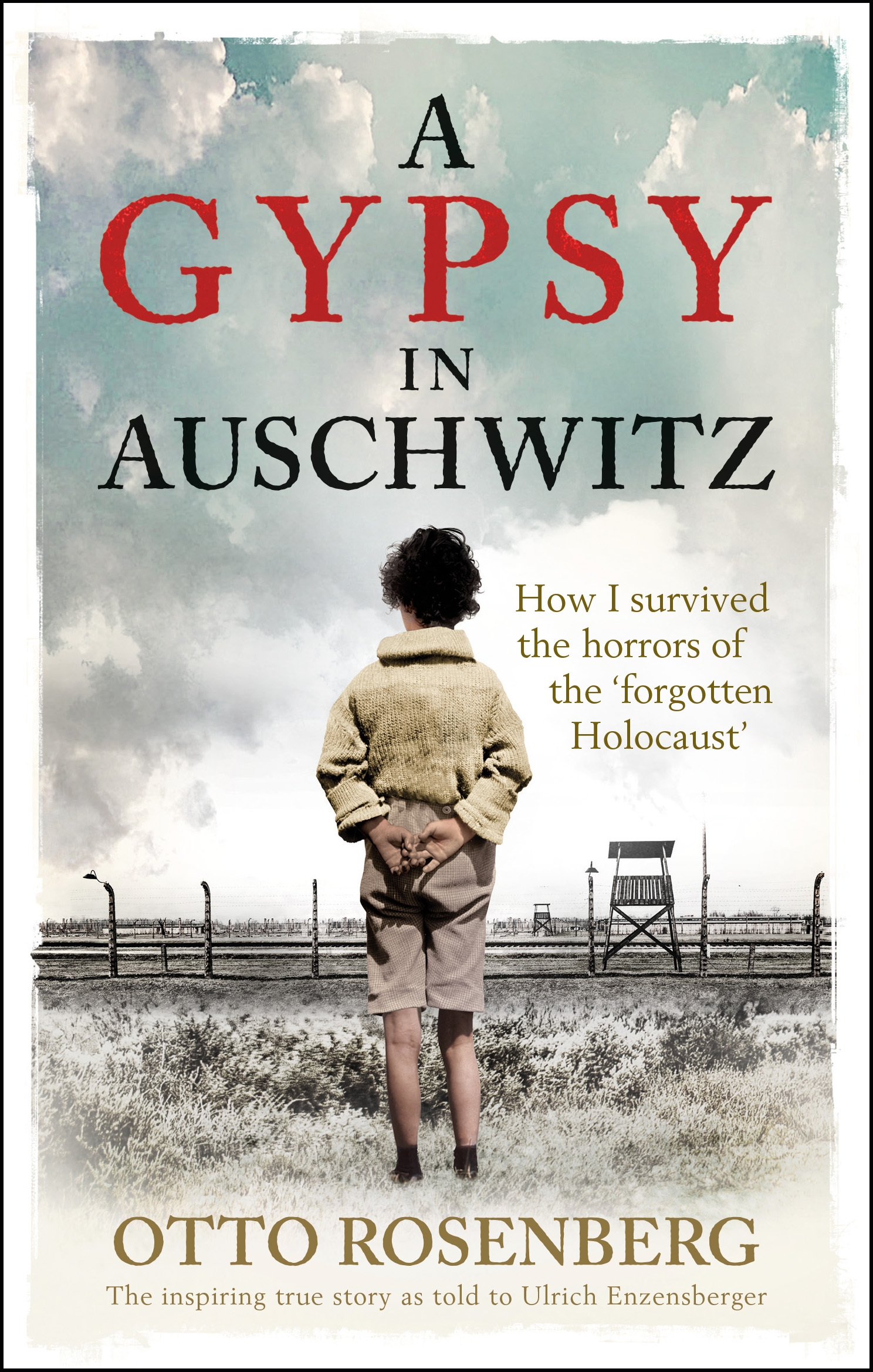
#Blogtour A Gypsy in Auschwitz by Otto Rosenberg

It's a pleasure to take part in the BlogTour A Gypsy in Auschwitz by Otto Rosenberg, as told to Ulrich Enzensberger and translated by Maisie Musgrave.

About the Author

Otto Rosenberg was born in East Prussia in 1927 and grew up in Berlin. He was 9 when he was sent to the Roma and Sinti camp in Marzahn, ahead of the 1936 Olympic Games, and 15 when he was sent to Auschwitz. He was then detained in Buchenwald and Bergen-Belsen concentration camps before being freed in 1945. 

In later years, Rosenberg was the chairman of the Regional Association of German Sinti and Romanies Berlin-Brandenburg and fathered seven children. He passed away in 2001.

Otto’s daughter, Petra Rosenberg, is the current Director of the Central Council of German Sinti and Roma Berlin-Brandenburg.

About the book

Otto Rosenberg is 9 and living in Berlin, poor but happy, when his family are first detained. All around them, Sinti and Roma families are being torn from their homes by Nazis , leaving behind schools, jobs, friends, and businesses to live in forced encampments outside the city. One by one, families are broken up, adults and children disappear or are ‘sent East’.

Otto arrives in Auschwitz aged 15 and is later transferred to Buechenwald and Bergen-Belsen. He works, scrounges food whenever he can, witnesses and suffers horrific violence and is driven close to death by illness more than once. Unbelievably, he also joins an armed revolt of prisoners who, facing the SS and certain death, refuse to back down. Somehow, through luck, sheer human will to live, or both, he survives.

The stories of Sinti and Roma suffering in Nazi Germany are all too often lost or untold. In this haunting account, Otto shares his story with a remarkable simplicity. Deeply moving, A Gypsy in Auschwitz is the incredible story of how a young Sinti boy miraculously survived the unimaginable darkness of the Holocaust.

Review

Otto is a mere nine years of age when he and his family are ripped from the comfort of their community and forced to fight to survive in the Marzahn camp. A labour camp with no housing or facilities that was filled with Sinti and Roma. They were targeted with a similar frenzy as the Jews were, because of their alleged racial impurity.

This is the story of a young boy who managed to survive the most vicious and deadly of concentration camps. A child who lost his family and friends, and yet despite his age was brave enough to try and stand up for himself and others by joining a revolt against his captors.

It's not unusual for someone who has suffered extreme trauma to disassociate themselves from the events, which is why autobiographies and first-hand accounts can sometimes appear a little to be told or written with a lack of emotion. It's a coping mechanism, keeping the memories and distress at bay, whilst making sure loved ones and victims are never forgotten.

What's equally important is the intergenerational trauma - epigenetic trauma is fascinating and tragic. Imagine being so traumatised that it seeps into the very fabric of your being, your chemistry even. Post-war Holocaust generations are aware of this and the impact, despite often never being privy to the real details and finer details of said trauma.

It remains vital that the stories of Holocaust survivors are told and heard, regardless of whether they are alive or not. Documentation, eyewitness accounts and first-hand stories are pivotal, as the years pass and the younger generations are introduced to either a whitewashed version, alternative facts such as ludicrous denials or simply no information at all. 

I have read a lot of Holocaust accounts, and am simultaneously disappointed and disturbed that there are still so many facts and stories hidden in the folds of history. The Roma and Sinti persecution tends to stand in the shadow of the other persecuted groups. I think what really rattled my cage about Otto's account was recognising the bureaucracy of the German nation, which is still a foundation of their structure today. The bureaucracy that stops the nomad community from receiving their financial dues, ergo still oppressing them with the efficiency of the Nazi party. 

The way they meticulously transcribed everything, and as we can see in this book those records and the use of that data, become relevant and remaining so for many years afterwards. Also that the way these war criminals, and they are criminals, just slid into important roles in every industry in the post-war era. No punishment or accountability, instead the victims were victimised further by having to watch the guilty live without the burden of trauma, and what's worse they have to live with the murderers among them.

It's an important read - one that should be taught in school and one we should be telling and retelling, so Otto and his experience never fall foul of the system that forgets and history that swallows up the voices of so many innocents. I won't forget Otto, his family or his community.

Buy A Gypsy in Auschwitz at Amazon Uk or go to Goodreads for any other retailer. Buy at Amazon com.

Tuesday, 12 January 2021

#BlogTour The German Girl by Lily Graham

It's a pleasure to take part in the BlogTour The German Girl by Lily Graham.

About the Author

Lily has been telling stories since she was a child, starting with her imaginary rabbit, Stephanus, and their adventures in the enchanted peach tree in her garden, which she envisioned as a magical portal to Enid Blyton’s Faraway Tree. She’s never really got out of the habit of making things up, and still thinks of Stephanus rather fondly.

She lives with her husband and her English bulldog, Fudge, and brings her love for the sea and country-living to her fiction.

Follow @lilygrahambooks on Twitter, on Amazon, on Goodreads, Visit lilygraham.net, on Facebook, Buy The German Girl

About the book

'Our parents were taken. And if we go home, the Nazis will take us too…’

Hamburg 1938. Fifteen-year-old Asta is hurrying home from school with her twin brother Jürgen. The mood in the city is tense – synagogues have been smashed with sledgehammers, and Asta is too frightened to laugh as she used to.

But when she and Jürgen are stopped in the street by a friend, her world implodes further. Her Jewish parents have been dragged into the streets by German soldiers and if she and Jürgen return to their house, they will be taken too.

Heartbroken at the loss of her parents, Asta knows they must flee. With her beloved brother, she must make the perilous journey across Germany and into Denmark to reach their only surviving relative, her aunt Trine, a woman they barely know.

Jammed into a truck with other refugees, Asta prays for a miracle to save herself and Jürgen. Crossing the border is a crime punishable by death, and what she and Jürgen must embark on a dangerous crossing on foot, through the snowy forest dividing Germany and Denmark. And when barking dogs and armed soldiers find Jürgen and Asta escapes, she must hold on to hope no matter what. One day she will find her twin, the other half of herself. Whatever the price she has to pay…

Review

Ingrid has taken on the difficult care of her dementia ridden grandfather. He lives in isolation and dislikes the interference of others, which makes it hard for his loved ones to take care of him. He slips into the past more often now and whilst doing so he reveals memories his granddaughter is unaware of. A life he has kept hidden, heartbreak and pain that have made him seem irrational at times.

Jürgen and Asta live in Hamburg and are beginning to see the rumbles of hatred, racism and the forebodings of the worst time in history to come. Their parents however are like many others in a sense that they think everything will blow over and there will always be time to up and leave at a later date. Unfortunately waiting becomes a death sentence for many. 

Although the outcome may seem clear from the beginning of the story, Graham does a good job of giving readers something more than the presumption of what is to come. I think it's fair to say that the true reach of the Nazi regime before and during World War 2 is often forgotten and underestimated. Just how many countries they managed to invade and control, and how invasive their tentacles of evil were.

The story of Jürgen and Asta gives a voice to those forgotten invasions and the horror that people lived through, but many millions more died because of. It speaks to the trauma, the sacrifices and the incredulity of those involved at the destruction and malice behind the power of the Nazi regime.

It's a powerful piece of historical fiction. It represents the unspoken stories of many.

Buy The German Girl at Amazon Uk or go to Goodreads for any other retailer. Publisher: Bookouture pub date 12 Jan. 2021. Buy at Amazon comHive

Monday, 17 August 2020

#BlogTour The Twins of Auschwitz by Eva Mozes Kor with Lisa Rojany Buccieri


It's a pleasure to take part in the last day of this fantastic BlogTour for The Twins of Auschwitz by Eva Mozes Kor with Lisa Rojany Buccieri.
About the Author
Eva Mozes Kor was a resident of Terre Haute, Indiana. Following her survival of Auschwitz, she became a recognised speaker, both nationally and internationally, on topics related to the Holocaust and social justice. Eva created the CANDLES organisation in 1985 to locate other Mengele twins and found 122 twins across the world. Ten years later, she opened the CANDLES Holocaust Museum to educate the public about the historic event she survived. A community leader, champion of human rights, and tireless educator, Eva has been covered in numerous media outlets and is the subject of a documentary, Forgiving Dr. Mengele. She passed away in 2019.

Find more books by Eva Mozes Kor on Amazon, on Goodreads, Visit The United States Holocaust Memorial Museum ushmm.org and candlesholocaustmuseum.orgBuy The Twins of Auschwitz

Follow on Lisa Rojany Buccieri on Amazon, on Goodreads, Visit lisarojany.com


About the book
In the summer of 1944, Eva Mozes Kor and her family arrived at Auschwitz. Within thirty minutes, they were separated. Her parents and two older sisters were taken to the gas chambers, while Eva and her twin, Miriam, were herded into the care of the man who became known as the Angel of Death: Dr. Josef Mengele. They were 10 years old.
The Nazis spared their lives because they were twins.
While twins at Auschwitz were granted the ‘privileges’ of keeping their own clothes and hair, they were also subjected to Mengele’s sadistic medical experiments. They were forced to fight daily for their own survival, and many died as a result of the experiments, or from the disease and hunger rife in the concentration camp.

Publishing for the first time in the UK in the year that marks the 75th anniversary of Auschwitz liberation, The Twins of Auschwitz shares the inspirational story of a child’s endurance and survival in the face of truly extraordinary evil.

Also included is an epilogue on Eva’s incredible recovery and her remarkable decision to publicly forgive the Nazis. Through her museum and her lectures, she dedicated her life to giving testimony on the Holocaust, providing a message of hope for people who have suffered, and worked toward goals of forgiveness, peace, and the elimination of hatred and prejudice in the world.

Review
Eva Mozes Kor is or was a remarkable woman. She dedicated the majority of her life to educating the world on the horrors of The Holocaust, the loss of her family, and the experiences both and her twin sister Miriam were subjected to at the hands of Dr. Josef Mengele. She also made a lot of waves and created discussion because of her choice to forgive her tormentors and the Nazis. She was very vocal, and watching the documentary Forgiving Dr. Mengele will give more insight into this approach to taking back the power for herself and living with some semblance of peace.

Given the level of atrocities, the systematic and well-oiled machinery of murder, which was used to annihilate millions of children, women and men - it's perhaps hard to understand the willingness to forgive. Understandable however if viewed merely from each person and their own perspective. How they live and deal with that burden of pain, torment, memories, nightmares and the survivor's guilt, is not for anyone else to judge. In equal measures neither is the way others deal with the anguish, anger or the way the legacy of trauma has caused epigenetic changes to the genes of Holocaust Survivor's and their children.

Eva Mozes Kor was very clear on it being her personal path, but also one she hoped others could find peace with. I think it is important that survivors share their stories and journeys in an attempt to stop the past from repeating itself, especially given the rise of anti-Semitism in the 21st century. We are seeing fascists, far-right and Nazi parties with politically correct party names sit in governments throughout Europe. Hate crimes against Jews are on the rise, Swastikas and Juden Raus are scrawled on walls, and neo-Nazis march through the streets once again. That's why the eyewitness and survivor accounts are so important.

It's a poignant story that should be shared and retold.

Buy The Twins of Auschwitz at Amazon Uk or go to Goodreads for any other retailer. Publisher: Monoray: pub date 6 August 2020 | Paperback | £7.99. Buy at Amazon com.

Thursday, 16 April 2020

Ashes by Christopher de Vinck


About the book
Belgium, July 1939: Simone Lyon is the daughter of a Belgium national hero, the famous General Joseph Lyon. Her best friend Hava Daniels, is the eldest daughter of a devout Jewish family. Despite growing up in different worlds, they are inseparable.

But when, in the spring of 1940, Nazi planes and tanks begin bombing Brussels, their resilience and strength are tested. Hava and Simone find themselves caught in the advancing onslaught and are forced to flee.

In an emotionally-charged race for survival, even the most harrowing horrors cannot break their bonds of love and friendship. The two teenage girls, will see their innocence fall, against the ugly backdrop of a war dictating that theirs was a friendship that should never have been.


Review
Belgium 1939, Simone is the daughter of a war hero. Her father is General Joseph Lyon, his reputation proceeds him and his daughter is treated with respect because she is his offspring. Her friend Hava comes from a devout Jewish family. That isn't something that bothers either of them until rumours start trickling through about the way the Germans are treating the Jews. Suddenly the girls are getting different reactions, depending on who they speak to. Slowly but surely the hatred and importance of not associating with the Nazi's enemy number one is seeping into their daily life.

When the Germans invade Belgium Hava is separated from her family, Simone's father is off to do his duty, which leaves both young girls alone and running away from the invading force. They nearly make it to some semblance of freedom, although that is debatable when the invaders are coming from all directions, when something terrible happens.

Simone forgets the promise she made to Hava and in a way she forgets her too. The war rages and life rages on. Survival of self becomes the most important factor in occupied Belgium.

One of the elements of the story I found really interesting was the way Simone reacted or rather her lack of reaction when it come to Hava being Jewish. Almost a denial that there is a difference between them for some people, even if it is one that is forced upon everyone during the Nazi regime. To Simone they are friends, sisters - they are the same. Unfortunately the truth is they are, but it becomes irrelevant during the war.

This is one of those stories that makes your heart weep a little, despite the inspirational message woven into the fabric of the tale. De Vinck gives both sides of the story, which includes the trauma and the truth, albeit it sometimes an uncomfortable one.

Buy/Pre-order Ashes at Amazon Uk or go to Goodreads for any other retailer. Publisher: Harper Inspire; pub date 18 Aug. 2020 - Kindle - pub date Paperback - 20.Aug 2020. Buy at Amazon com.

Follow Christopher de Vinck on Goodreads,

Thursday, 17 October 2019

The Tenth Muse by Catherine Chung

Review
It takes a talented scribe to write about mathematics and keep non-maths enthusiasts captivated. Luckily Chung does so quite successfully by weaving the facts with the fiction and the complex theories of mathematics. Chung manages to take the world of numbers and meld it perfectly with history, and with the turmoil of emotions we humans bring to the table.

In essence this a story about a woman achieving recognition in a man's world and simultaneously about Katherine discovering her true past and heritage. Even in the face of pure talent the majority of her peers and tutors refuse to acknowledge said talent, which leads to betrayal, disappointment and defines her path in life.

Without giving too much of the plot away, there is a moment in this story, which is filled with gender inequality, misogyny and oppression of intelligent women and women in general, when the betrayal comes from someone who knows firsthand how hard it is to succeed as a woman in a patriarchal society. I think this moment is one of the most poignant, because Katherine bows down and accepts the oppression out of a false sense of loyalty towards a fellow woman.

In a way the fate of her parents becomes like one of the unsolved mathematical problems. Riemann's hypothesis becomes a metaphor for the unsolved mystery of Katherine's parents.

It's historical fiction, women's fiction and a mystery to boot. Chung wades through oppression and ventures into empowerment, whilst weaving in and out of the secrets of the past.

Buy The Tenth Muse at Amazon Uk or go to Goodreads for any other retailer. Publisher: Little, Brown Book Group - ebook pub date June 2019 - Hardback pub date 7 November 2019. Buy at Amazon com.

Follow @chung_catherine on Twitter, on Goodreads, on Amazon, Visit catherinechung.com

Tuesday, 12 March 2019

#BlogTour The Courier by Kjell Ola Dahl


Today it's my turn on the BlogTour The Courier by Kjell Ola Dahl, (Translator: Don Bartlett). It's a driven, enthralling combination of crime, spy, political and historical fiction with skewed lines of betrayal, truth and justice.

About the Author
One of the fathers of the Nordic Noir genre, Kjell Ola Dahl was born in 1958 in Gjøvik. He made his debut in 1993, and has since published eleven novels, the most prominent of which is a series of police procedurals cum psychological thrillers featuring investigators Gunnarstranda and Frølich. In 2000 he won the Riverton Prize for The Last Fix and he won both the prestigious Brage and Riverton Prizes for The Courier in 2015. His work has been published in 14 countries, and he lives in Oslo.

Follow @ko_dahl @OrendaBooks #TheCourier on Twitter,Visit  kjelloladahl.noBuy The Courier


About the book
In Oslo in 1942, Jewish courier Ester is betrayed, narrowly avoiding arrest by the Gestapo. In great haste, she escapes to Sweden whilst the rest of her family is deported to Auschwitz.

In Stockholm, Ester meets the resistance hero, Gerhard Falkum, who has left his little daughter and fled both the Germans and allegations that he murdered his wife, Åse, Ester ’s childhood best friend.

A relationship develops between them, but ends abruptly when Falkum dies in a fire. And yet, twenty-five years later, Falkum shows up in Oslo. He wants to reconnect with his daughter Turid. But where has he been, and what is the real reason for his return? Ester stumbles across information that forces her to look closely at her past, and to revisit her war-time training to stay alive…

Review
Nicely done! This author plans with such meticulous accuracy it's a pleasure to read how the crime, the solution and whole premise comes full circle from start to fruition. At times the reader is left wondering how on earth all the threads are going to be pulled together successfully or indeed at all.

The author takes the reader back and forth through three timelines. It starts in 2015 when Turid recognises a stolen family heirloom on an auction site and she sets out to retrieve what is rightfully hers. Then we are taken into the year 1942 and the world of the Holocaust, occupied Finland and the men and women of the resistance.

Some of those characters reunite again in the 196os, when a former resistance hero, Gerhard Falkum, rises from the dead to return to his daughter. A young woman orphaned as a baby when both parents are killed in the midst of a brutal war.

I was sure of the whodunnit from the get-go, but the author made me doubt the why and often even if I was right about the culprit. For me, although it is at the core a story about one murder hidden in a decade full of murderous atrocities, it's also about the circumstances which lead to the crime. The attempt to let the past and the dead rest in peace, and understanding that sometimes the truth is best left buried.

It's also about whether a leopard changes its spots, especially when it is given the opportunity to prey on more vulnerable targets than ever before. Does fighting against an evil regime, a sense of righteous indignation and need for vengeance give certain people a false sense of brotherhood and trust? The kind of misplaced trust that can kill people perhaps.

It's a driven, enthralling combination of crime, spy, political and historical fiction with skewed lines of betrayal, truth and justice. Kjell Ola Dahl is a scribe who writes with conviction and a simmering passion for the written word.

Buy The Courier at Amazon Uk or go to Goodreads for any other retailer. Publisher: Orenda Books: pub date 21 Mar. 2019. Buy at Amazon com.

Read my review of The Ice Swimmer by Kjell Ola Dahl.
Read my review of Faithless by Kjell Ola Dahl.


Tuesday, 13 March 2018

#BlogTour Among the Branded by Linda Smolkin

It is my pleasure to take part in the BlogTour for Among the Branded by Linda Smolkin. I do enjoy a read that makes the reader think and ask questions. The readers may come away from it with very different experiences, but either way it will be a memorable one.
About the Author
Linda Smolkin always wanted to be a writer—ever since she saw her first TV commercial and wondered how to pen those clever ads. She got her degree in journalism and became a copywriter. Linda landed a job at an ad agency, where she worked for several years before joining the nonprofit world. She's currently working on her second novel, which will be released in Spring 2018. When not in front of the computer, she's behind the drums (slightly) annoying her husband, son, and their 70-pound dog.

Follow @lindasmolkin
Follow @AuthorLindaSmolkin on Facebook
Visit  lindasmolkin.com
Buy Among the Branded
About the book
What if a 70-year-old letter from World War II changed the course of your life?

While attending Valor of the ’40s, art director Stephanie Britain stumbles upon a flea market selling letters from the war. She buys a handful, hoping they’ll inspire the redesign for a client’s website at her branding and design firm. She’s at first drawn by the lost art of penmanship, but soon discovers a hidden treasure nestled inside declarations of love from homesick soldiers. Stephanie enlists a coworker to translate one and realizes it’s not a love letter after all. When a shocking discovery about a client causes Stephanie to question her principles and dedication to her firm’s business, she’s forced to make a difficult decision—one that could give her peace of mind, yet ruin her career in the process.

Contemporary fiction with a historical touch, AMONG THE BRANDED explores family life, an unexpected friendship, and moral conflicts that make us wonder what’s more important: our livelihood or our beliefs. This moving debut novel by Linda Smolkin is a great addition for readers who enjoy books by Jodi Picoult, Kristin Hannah, and Liane Moriarty.
Review
Among the Branded is a story about family and making emotional connections even when there are no blood ties. When Stephanie buys a vintage love letter at a re-enactment festival called Valor of the 40's, she finds herself drawn to discover the people mentioned in the letter. The letter is written by a Jewish woman trying to save her family, who are already embarked on their path straight to a certain death, however their then five year old son Isadore was rescued from the hands of the Nazi's. Stephanie makes it her mission to discover their story and in doing so finds herself making the kind of human connection we all wish for in life.

Stephanie represents each and every one of us. Smolkin has made her main character the collective conscience, which is a bold move in a story some may just wave away as a tale of friendship. It isn't, whether it is per chance or intentional, the author is asking her readers to acknowledge that the way we react in our generation can perhaps change the repetitive process of human mistakes and history.

Kudos to Smolkin for calling out France by the way. Quite a few countries like to whitewash their involvement in the Holocaust or try to change the narrative of the past. At this very moment Poland is trying to force the world and its own countrymen to accept their new and improved version of their involvement in the atrocities. Let's wave at Switzerland too. while we're at it.

For me the most intriguing storyline was the one about business over conscience. Every one of us has a set of morals and ethics we live by, and sometimes we are put in positions where we have to make a choice to follow them or not. In this case it is money vs working with an anti-Semite, a neo Nazi.

You might not be aware of it, but every one of us has probably bought or used the products produced or funded by companies with dark pasts or involved in dubious dealings. Ask yourself whether you would still buy the stylish fountain pen or school pencil if you knew the brand had a Nazi past (Faber-Castell), how about driving a BMW, VW, Audi, Mercedes or bought a Hugo Boss perfume or an article of clothing (those SS suits looked sharp, didn't they?).

So we have to make a choice whether or not to fund the collaborators or firms like I.G.Farben, who used slave labour and built labour camps near Auschwitz or buy elsewhere because of their contribution to mass murder. To be completely fair one would have to acknowledge that these are historic crimes, but what if the brand was a known fascist, racist or anti-Semite now? Would you still give them your money?

I see outrage when it comes to the use of real fur, mass transports of animals and animal testing. Consumers making a choice to buy elsewhere. I wonder why other causes have more validity than the ones with links to or collaboration with historical war crimes?

We have a choice and a voice, instead of staying silent and letting hate rule our countries we need to step up to the plate and speak out. Let's not watch the world sit by idly once again, as fascists scaremonger the ill-informed and repeat the past again.

Although Smolkin presents her story softly and with great care not to rock any boats, I believe the dialogue between the lines is one of great clarity. It speaks of kindness, compassion and understanding, whilst drawing a clear boundary in the sand when it comes to hatred.

Buy Among the Branded at Amazon Uk or go to Goodreads for any other retailer.
Pub. date 28th April 2018

Tuesday, 27 February 2018

My Dear Ones: One Family and the Final Solution by Jonathan Wittenberg

Wittenberg presents the fate of his family members and friends through a series of written correspondence throughout the Nazi regime, the war and the years after WW2.

I can imagine it must have been incredibly painful and frustrating to read such loving, but often mundane letters, knowing that they were being prevented from writing the truth. Their letters were censored and towards the end more or less dictated to them by others, to give the impression they were being cared for by their captors.

At times it seems as if the author would rather accept the frivolity and pretence of the content of the letters, despite being aware of and relating the historical facts and truth. I believe this is his attempt to maintain a scholars neutrality. Never presume, and if you can, always back your facts up with evidence, which he has done in every instance. He has narrowed down the possible scenarios to the nearest provable possibility, and does not venture into what might have happened. His conclusions are based on written testimony and eyewitness reports.

The factor of the unknown is what plagued, and still plagues, the majority of the survivors and their descendants. The Nazi regime and their collaborators were meticulous record-keepers and when the time came experts at destroying said records and evidence.

You can't erase years of well-planned mass murder. You can however change the narrative of history, which is why Holocaust deniers are so dangerous.

Wittenberg reads between the lines, as his family members have done before him, so the narrative becomes one between stark reality and wishful thinking. It is obvious that Jonathan Wittenberg has spent a lot of time searching for some wisp of memory, a physical residue or a sense of being in the locations his ancestors once walked, lived and died in.

In trying to find understanding and peace, he has also tried to find an imprint they may have made on their journey through life. Something more than just restricted handwritten letters, and although these are a priceless family heirloom, one can feel he wanted to connect with them on a more spiritual level. I feel you, I feel your pain. We are family, my blood is your blood, and we will never forget you.

Which is of course the essence of any biographical or autobiographical story about the Holocaust. To tell the world, remind the new generations of those who live on only in the memories of their loved ones, so they will be less inclined to repeat the past.

In his own way Jonathan Wittenberg, Rabbi Wittenberg has created a written testimony to keep the memories alive. To keep the truth from being extinguished, much like every inch of their existence and their lives were eradicated in an attempt to act as if they had never even existed at all.

Buy My Dear Ones at Amazon Uk or go to Goodreads for any other retailer.

Follow @RabbiWittenberg

Visit jonathanwittenberg.org

Saturday, 10 February 2018

The Tattooist of Auschwitz by Heather Morris

Taking into consideration that this is an eyewitness narrative, which I find preferable when it comes to Holocaust themed books, and an important historical account, I do wonder if Lale Solokov subconsciously or inadvertently romanticized the more uplifting parts of his story.

Memory is a tricky thing at the best of times, recalling memories made under extreme duress and/or trauma can sometimes interfere with the way we interpret memories.

I believe he made life seem simpler and less traumatic than it was. His relationship and encounters with Gita read like a complicated romance novel, and because of that some of the scenarios seem improbable.

When he or rather the author, relates the more brutal and heinous events there seems to be a reluctance to be cruel and honest. There is no such thing as gratuitous when it comes to laying bare the crimes of the Holocaust.

Again I am not sure whether that was Lale or the author changing the narrative just slightly to make the romance pop more or if it was just easier to focus on a more pleasant scenario. To remember the positive of meeting her instead of the negative of fearing she would die.

Like many survivors, Lale sat on his story for many decades. It wasn't until Gita died that he decided the world needed to know his story. I can imagine he felt terrible survivor's guilt and guilt in general for perhaps feeling like he contributed to the demise of many victims. I can't imagine what it must have felt like to see the physical proof of his personal trauma on real people. Being responsible for marking his fellow humans like cattle.To him it would have been irrelevant that he had no choice. Survival is an instinct, and I am glad a lot of survivors lived to tell the world about the heinous crimes of the Holocaust.

As I said before, the stories of survivors need to be told, without them there is more chance we will repeat the past. Morris does that in a sensitive way, and she brings a little lightness to a very dark story.

Buy The Tattooist of Auschwitz at Amazon uk or go to Goodreads for any other retailer.
Follow @BonnierZaffre

Tuesday, 11 April 2017

The Women in the Castle by Jessica Shattuck

When you compare how many books are written about the perpetrators of the Holocaust vs books on the brave people who tried to stop the face of evil. Well, the scales are rather imbalanced. Regardless of whether it would have changed the outcome of history or not, at least they tried. Against all odds, they tried..

Marianne thinks she needs to keep her promise to protect the women and children of her husband's co-conspirators. That in itself is a noble thing to do, and she does in fact save Benita, Ania and their children in her own way, however Marianne can be very judgemental at the same time.

The pain, horror and difficulties of those considered to be the guilty party tend to be swept under the rug. After everything the people of Germany did, and their collaborators of course, why would anyone feel any pity towards them? The author gives the reader a flavour of some of those post-war difficulties. This doesn't mean she excuses or shifts the blame, she just tries to remind us that in war there is a lot of collateral damage, and the lines between guilt and innocence are often very blurry.

Towards the end of the book there are conversations between Ania and her daughter Mary. They are reminiscent of conversations, questions and clarifications Jessica Shattuck had with her own grandmother about her past.( I loved my grandmother, but she was a Nazi) Shattuck has tried to align the image she has of her grandmother with that of her past as a member of the Nazi party.

Many scholars and historians have spoken of a collective criminality, responsibility and guilt when it comes to the Nazi era. Men and women, who under normal circumstances would never have committed crimes, are guilty of participating in and allowing the worst of atrocities.

No matter how hard Shattuck looks for an explanation there will never be a satisfactory answer. The majority of these men and women weren't sociopaths, psychopaths or sadists. The majority of them were normal people in the midst of a mass movement of propaganda, patriotism and not so subtle brainwashing, who did condone and commit sadistic crimes. They looked the other way and chose to believe the truth of the concentration camps was merely Allied propaganda. It's easier to ignore than to accept that you are part of the problem.

The one thing Shattuck can and should take away from all of her literary attempts to alleviate some genetic sense of guilt, is that the descendants are not to blame for the sins, mistakes or crimes of their ancestors.

The Women in the Castle is a well balanced read. It considers both sides of the coin, and most importantly the collaboration of both sides to attempt to rebuild lives after the war. Marianne, Ania and Benita are mothers and friends, there aren't just women influenced and driven by the choices of their past.

It is tale of friendship, hardship and ultimately one of loyalty. Shattuck delivers the harsh reality of war in a direct and no nonsense way. There is no need for violins or overly dramatic scenes. The truth is sufficient. Definitely an author I will be revisiting again.

Buy The Women in the Castle at Amazon Uk or go to Goodreads for any other retailer.

Tuesday, 20 September 2016

Susi, the granddaughter from house nr.4 by Birgitta Behr (English review)

I think this book is remarkable, it would be perfect for educational purposes. It is the type of book that should be available in primary and high schools. It is a great way of teaching children and teens about one of the darkest eras of 20th century history.
I really liked the way Behr combined the artistic element of the book with the narrative and prose. She delivers the changes in the law, the atmosphere and behaviour towards Jews during the Nazi era, in a way that is concise and brutally honest. At the same time she manages to deliver history through the eyes of a child and with a lot of compassion.
The illustrations are simplistic and yet at the same time they are crude and to the point. They are enhanced by the written slogans, graffiti and the story itself.
Susi experiences how her life is taken apart and destroyed bit by bit by the changes in her country. Suddenly Jews are persona non grata. Her family has to rely on both friends and strangers to help them to survive the atrocities of the war. There are plenty of unsung brave people, who helped instead of looking away during that difficult time. They tend to be forgotten when history is recalled.
Behr brings you up close and personal to the events of that time period without having to use any graphic images or violence. The new laws and 'rules' are shown in form of crude slogans, which makes it all the more realistic. The words show the injustice and inhumanity without having to show the true measure of the violent situation.
The focus of the book is on this one family, as opposed to everyone who suffered and the entirety of the situation. In a way it makes the book even more poignant and it gives the reader the feeling of empathy and of being involved. The reader relates to the little girl, because it is easier to connect to her fate and story.
It is a book of important historical relevance and one I will gladly recommend.
Buy Susi, die Enkelin von Haus Nr.4 bei Amazon deAmazon UK or go to Goodreads for any other retailer.

Read Susi, die Enkelin von Haus Nr. 4 (German review)

Susi, die Enkelin von Haus Nummer 4 von Birgitta Behr

Es ist ein bemerkenswertes Buch. Es sollte zum Lehrmaterial in Grundschulen und weiterbildenden Schulen dazugehören. Mit diesem Buch kann man den geschichtlichen Ereignissen in diesem bestimmten Zeitraum gerecht werden, und dabei hoffentlich den neuen Generationen aus den Fehlern der Vergangenheit lehren lassen.

Die Geschichte handelt von einem jungen jüdischen Mädchen dessen Familie und Leben auseinander gerissen wird, wahrend des Zeitalters der National-Sozialisten und des Zweiten Weltkrieges.

Susi muss mit ansehen wie ihr Leben und alles was ihre lieb ist langsam zerstört wird. Juden sind plötzlich persona non grata. Ihre Familie muss sich auf Freunde und Fremde verlassen, die sich selbst in Lebensgefahr begeben um die kleine Familie zu schützen.

Mir gefällt die Kombination von Illustrationen, historische Fakten und Behr bringt einem nahe an das Geschehen ohne nackte Gewalt oder Schreckensbilder. Die Worte sind effektiv in dem Sinne, das Sie die starken Kontraste, die Ungerechtigkeiten und die Wahrheit darstellt ohne auf Spezialeffekte zurückgreifen zu müssen.

Behr macht den Leser auch darauf aufmerksam, das es auch Lichtblicke gab in diesem schrecklichen Zeitalter. Es gab auch viele mutige Menschen, dessen Namen und Geschichten unter dem großen Gewicht der Schuld verschwanden.

Der Schwerpunkt dieser Geschichte liegt auf die Ereignisse von dem diese Familie persönlich betroffen sind. Dadurch werden die restlichen historischen Ereignisse nicht vermindert, sondern eher in den Hintergrund verschoben, um mehr Aufmerksamkeit auf die einzelnen Schicksale zu lenken.

Eine Bilderbuchgeschichte mit historisch wichtigen Inhalt.

Kaufe Susi, die Enkelin von Haus Nummer 4 bei Amazon de, Amazon UK oder schau mal bei Goodreads vorbei für andere Anbieter.

Read Susi, die Enkelin von Haus Nr. 4 (English review)

Monday, 19 September 2016

Mischling by Affinity Konar

Mischling is a fictional story based on, or rather Konar took inspiration from, the true experiences of Holocaust survivors.

In particular on those of Eva Mozes Kor and Miriam Mozes, who were two of the 3000 children unfortunate enough to end up in the hands of the sadistic Dr. Mengele, also known as the Angel of Death.

He was known to pick twins, triplets and any other people with specific abnormalities, because of his interest in genetics. He shared his findings with his mentor and the Kaiser Wilhelm Society, the predecessor of the Max Planck Institute.

Only a small number of those children survived the experiments and the concentration camp. Many of those have suffered from numerous medical problems, were mutilated and have subsequently succumbed to the repercussions of the experiments inflicted upon them, including Miriam Mozes.

Tragically the medical manipulations have possibly also been passed down to future generations. A few of the very small number of these particular survivors, who are still alive, and their offspring have willingly participated in research to try and understand the future consequences of those experiments and the possible genetic changes caused by the them and the trauma (epigenetics).

The survivors have had to live with the nightmares of being part of Mengele's sadistic human zoo. They have beaten the odds to survive and tell their tales only to be struck down by the same man at a later date, and the fact his actions may also be making their offspring ill, is truly diabolical. Luckily he isn't here to pat himself on the back.

Mengele managed to evade any form of punishment for his actions. He lived in comfort with his family for many years in Argentina, as did many war criminals from the Nazi regime.
Mengele used the platform of the concentration camp to live out his cruel, sadistic tendencies all in the hypothetical name of science and research. Fact of the matter is he enjoyed and took pride in the pain he inflicted on others. His victims were nothing more than subjects in his mind. Aside from the horrific and inhumane experimentation, he also often abused, tortured and killed for pleasure, during his reign in Auschwitz.

Pearl and Stasha are the main characters in Mischling. They are Jews with fair hair, hence why Mengele thinks they are Mischlinge (of mixed race). Each twin tells their own story, switching from chapter to chapter. Stasha believes that Mengele views her as special, which is why he makes her immune from death. This belief and her retreat into a world of imagination and denial, is how she deals with the trauma. Whereas Pearl is a realist and remains resourceful throughout her time with Mengele. Stasha seems oblivious to the abuse and experimentation both she, but especially her sister has to endure. The disappearance of Pearl is pivotal in the change in her behaviour. The fact she doesn't want to accept the death of her twin is ultimately what saves Stasha from giving up. Denial is her coping mechanism.

Stasha connects with a young boy, who has lost his own twin. The loss of the twin was very important to the survival of any the remaining twin in Auschwitz. When one died the other would soon be killed, so Mengele could compare and autopsy the corpses.
Eva and Miriam Mozes at Auschwitz
Pearl finds herself drawn to the Jewish doctor who assists Mengele, albeit unwillingly, and the Czech soldier in charge of the admin. Both of them struggle with the guilt of their actions. One of elements of the Holocaust that Konar alludes to in Mischling is the culpability of those people forced to become part of the systematic extermination. In a life or death situation you make a choice, and in this instance those choices weren't always about self-preservation. There were family members and fellow victims to consider and the majority wanted to make sure the world knew what the Nazi regime had done.

So, imagine you are faced with death or collaboration. The type of collaboration that kills you inside bit by bit, forced to commit abominations under duress. How guilty does that make you? There is a huge difference between those that collaborated with the regime and helped willingly, and those that had no other choice but death. They tried in their own way to help fellow prisoners. Many children, often not even related, were passed off as twins, in an attempt to give them a greater chance of survival.

To be completely frank it isn't an easy read, if you look at it on a purely emotional level. Even after all these years, having read, watched and listened to many survivor's relate their stories, I can still can't fathom the depth and range of the inhumanity of the Holocaust.

Although I loved the read, despite the horrific nature of the topic and the fact it is based on true events, I did feel as if the last few chapters didn't do the rest justice. I can imagine that even as an author both the writing and the research of not only the Holocaust, but specifically the atrocities committed by Mengele, would take a toll on anyone. Suck the heart and soul right out of you. It felt as if Konar had been weighted down and burdened by all of it towards the end. As a reader and as a Mensch I can completely understand that. Kudos to the author for this powerful, insightful and extremely poignant read.

It is not only a read I highly recommend, it is also one I will be gifting to others.

Buy Mischling at Amazon Uk or go to Goodreads for any other retailer.

Remembering the Mengele Twins at the CANDLES Holocaust Museum
United States Holocaust Memorial Museum